Your Worst Rounds Are Your Best Coaches: How Elite Clans Turn Loss Footage Into a Winning Edge
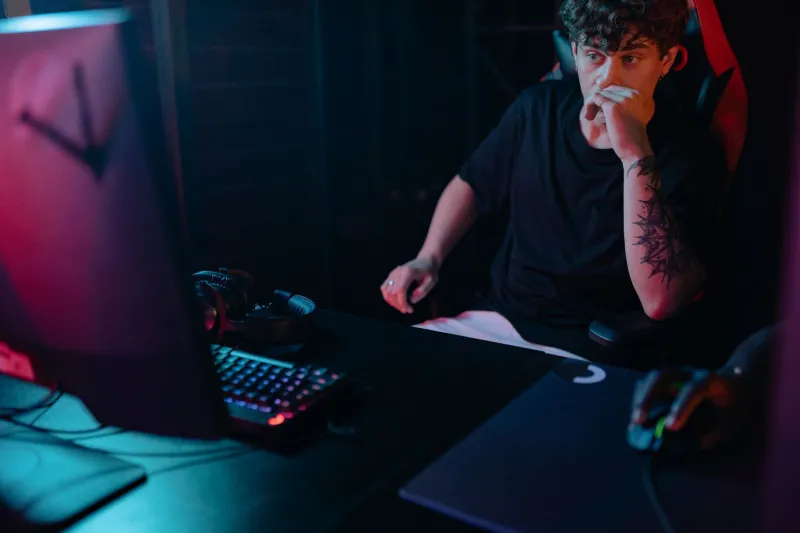
There's a certain ritual that plays out in Discord servers across competitive gaming every weekend. A clan finishes a tournament run, gets knocked out earlier than expected, and someone drops a clip of that one sick play from round two. The server lights up. Everyone agrees it was clean. Then the conversation moves on.
What nobody does? Pull up the round they lost 13-4 and actually watch it.
That gap — between the clans who review their wins and the clans who systematically study their losses — is quietly responsible for a massive chunk of the skill disparity you see in competitive clan play. VOD review is one of the most talked-about concepts in esports, but the way most clans actually practice it is nearly useless. Watching footage without a framework is just reliving the pain. Watching it the right way is how you stop repeating it.
Why Clans Avoid the Ugly Tape
Let's be honest about why loss review doesn't happen more often: it's uncomfortable. Nobody wants to watch themselves get outplayed for forty-five minutes. There's a natural psychological pull toward protecting your own confidence, especially in a team environment where ego and cohesion are always in tension.
Beyond the emotional friction, there's also a structure problem. Most clans don't have a defined process for review sessions. They sit down, someone shares their screen, people start talking over each other, someone gets defensive, and the whole thing devolves into a blame session that leaves everyone feeling worse than before. After a few of those experiences, it's no surprise that clans quietly stop scheduling them.
But here's the thing: the discomfort is the point. The rounds where your clan fell apart under pressure, got caught in the same rotation mistake three times, or completely abandoned the strategy you spent two weeks building — those are the sessions with the most extractable data. Wins teach you what worked once. Losses teach you what keeps failing.
Build the Framework Before You Press Play
The clans getting real value out of VOD review aren't just winging it. They come into sessions with a defined structure, assigned roles, and specific questions they're trying to answer. Here's a basic framework that actually holds up in practice:
Assign a session lead. This person controls the playback, decides when to pause, and keeps the conversation focused. Without a moderator, review sessions fall apart fast. The lead doesn't have to be the clan leader — it should be whoever is most analytical and least defensive about what's on screen.
Set the agenda before you hit play. What are you looking for in this session? Pick two or three specific focus areas — rotations, communication timing, positioning on defense, whatever was visibly breaking down. Trying to analyze everything at once means you analyze nothing well.
Use a timestamp log. Someone other than the session lead should be taking notes with timestamps in real time. "4:22 — B site entry, third player late by four seconds" is infinitely more useful than a vague memory of "we were always slow on B." Google Docs, a Discord thread, a physical notepad — the format doesn't matter. The habit does.
Separate observation from interpretation. The first pass through footage should be purely descriptive. What happened? Where was everyone? What decision was made? Save the "why did you do that" conversation for after you've established the facts. This keeps the session from turning into a hot take competition.
The Common Mistakes That Turn Film Study Into Film Waste
Even clans that commit to regular VOD review often fall into patterns that drain the value out of the process.
Only reviewing the final round. The deciding round of a match is emotionally salient, but it's not always where the match was actually lost. Deficits are usually built across multiple rounds. Review the full match, or at minimum the rounds where momentum shifted.
Focusing exclusively on individual errors. Yes, that whiff was bad. But individual mistakes usually exist inside a systemic failure — a miscommunication, a broken callout, a strategy that assumed perfect execution. If your review sessions are just a highlight reel of who messed up, you're missing the structural problems underneath.
Skipping the opponent's perspective. Your own footage shows you what you did. It doesn't always show you why the enemy team's approach was effective. When possible, get spectator footage or review from a neutral vantage point. Understanding what your opponents were actually executing helps you recognize similar patterns in future matchups.
Never closing the loop. This might be the biggest one. You identify three recurring positioning errors in your session. Great. Now what? If there's no defined follow-up — specific drills, a revised callout structure, a checkpoint in the next scrim — the review session was just venting with timestamps. Build a short action list at the end of every session and actually reference it before your next match.
Making Loss Review Part of the Culture
The process stuff matters, but none of it sticks without buy-in from the whole roster. And getting a team of competitive gamers to willingly spend an hour watching themselves lose requires some cultural groundwork.
The most effective approach is to normalize it early and often — not just after bad losses, but after every match. When VOD review is a regular rhythm rather than an emergency response to a bad tournament, it loses the punitive feeling. It's just what your clan does.
It also helps to lead with curiosity rather than criticism. "I want to understand what happened on that rotation" lands differently than "why did you rotate there." Small phrasing shifts make a real difference when people are watching footage of their own mistakes in a group setting.
Some clans designate a "tape analyst" role — someone who does a first pass through footage solo before the group session, flagging the most relevant moments and building the session agenda. This cuts down on meandering and makes group time much more efficient. If you've got a member who's analytically inclined and doesn't mind the extra work, that role is worth formalizing.
The Compounding Advantage
Here's what makes systematic loss review so powerful over the long run: the lessons compound. A clan that runs structured VOD sessions after every tournament doesn't just fix individual mistakes — it builds a shared vocabulary, a collective memory of what failure patterns look like, and a faster feedback loop than raw practice time alone can create.
Your opponents are grinding scrims. That's good. You should be too. But the clans pulling ahead aren't just outpracticing everyone — they're outlearning everyone. And the fastest path to outlearning the competition runs directly through the footage you'd rather forget.
Press play on the loss. That's where the real coaching starts.